
Linked List 連結串列
Linked list 是一種常見的資料結構,其使用 node (節點) 來記錄、表示、儲存資料 (data),並利用每個 node 中的 pointer 指向下一個 node,藉此將多個 node 串連起來,形成 Linked list,並以 NULL 來代表 Linked list的終點。
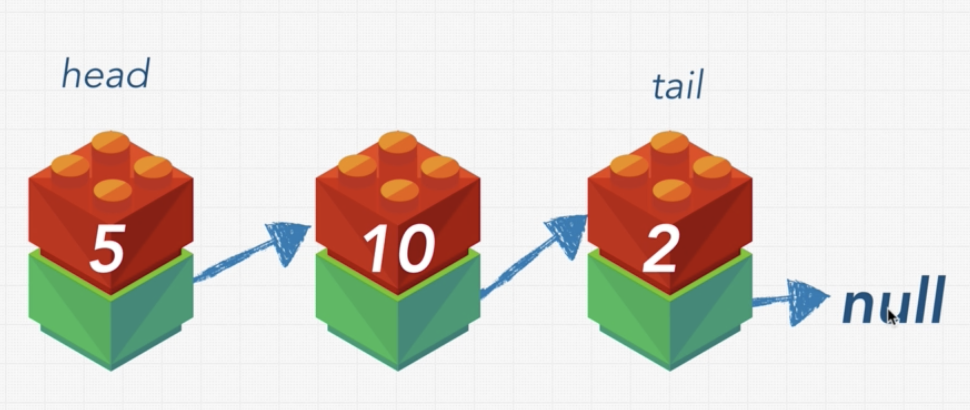
優點:
append、prepend: 只要對 head 或 tail 調整 pointer 所指向的 node 即可 O(1),不需要像 array 一樣搬動其餘元素。
不需使用連續記憶體空間,不需事先指定串列大小
各節點資料型態並不一定要相同
缺點:
lookup: 沒有像 Array 的 index 那樣方便,若要找到特定node,需要從頭(head node) traverse,搜尋的時間複雜度為 O(n)。
insert、remove: node,需要先作 O(n) traverse 到特定 node 後,再作後續新增、刪除 node …的動作。
- 需要額外的記憶體空間來儲存指到下一個 node 的 pointer。
使用時機:
Javascript Linked List:
建立 class
1
2
3
4
5
6
7
8
9
10
11
12
| class LinkedList {
constructor(value) {
this.head = {
value: value,
next: null
};
this.tail = this.head;
this.length = 1;
}
}
let myLinkedList = new LinkedList(0);
|
append
1
2
3
4
5
6
7
8
9
10
11
12
13
14
15
16
17
18
19
20
21
22
23
24
25
26
27
| class LinkedList {
append(value) {
const newNode = {
value: value,
next: null
}
this.tail.next = newNode;
this.tail = newNode;
this.length++;
return this;
}
printList() {
const array = [];
let currentNode = this.head;
while(currentNode !== null){
array.push(currentNode.value)
currentNode = currentNode.next
}
return array;
}
}
myLinkedList.append(1);
myLinkedList.printList(1);
|
prepend
1
2
3
4
5
6
7
8
9
10
11
| prepend(value) {
const newNode = {
value: value,
next: null
}
newNode.next = this.head;
this.head = newNode;
this.length++;
return this;
}
|
insert
1
2
3
4
5
6
7
8
9
10
11
12
13
14
15
16
17
18
19
20
21
22
23
24
25
26
27
28
29
| insert(index, value){
if(index >= this.length) {
console.log('yes')
return this.append(value);
}
const newNode = {
value: value,
next: null
}
const leader = this.traverseToIndex(index-1);
const holdingPointer = leader.next;
leader.next = newNode;
newNode.next = holdingPointer;
this.length++;
return this.printList();
}
traverseToIndex(index) {
let counter = 0;
let currentNode = this.head;
while(counter !== index){
currentNode = currentNode.next;
counter++;
}
return currentNode;
}
|
remove
1
2
3
4
5
6
7
| remove(index) {
const leader = this.traverseToIndex(index-1);
const unwantedNode = leader.next;
leader.next = unwantedNode.next;
this.length--;
return this.printList();
}
|
indexOf
1
2
3
4
5
6
7
8
9
10
11
12
| indexOf(value) {
let currentNode = this.head;
let index = 0;
while(currentNode) {
if(value === currentNode.value) {
return index;
}
index++;
currentNode = currentNode.next;
}
return -1;
}
|
Comments